Grouting vs Epoxy: Choosing the Right Option
In the construction industry, grout and epoxy are two commonly used materials. They are both binding agents, but they differ significantly in terms of their composition, application, and performance.
Grout is a cement-based material whose common application is in filling gaps between tiles or masonry structures. It comprises a mixture of cement, water, and sand, and in some cases, additional additives with the objective to increase its durability and potency.
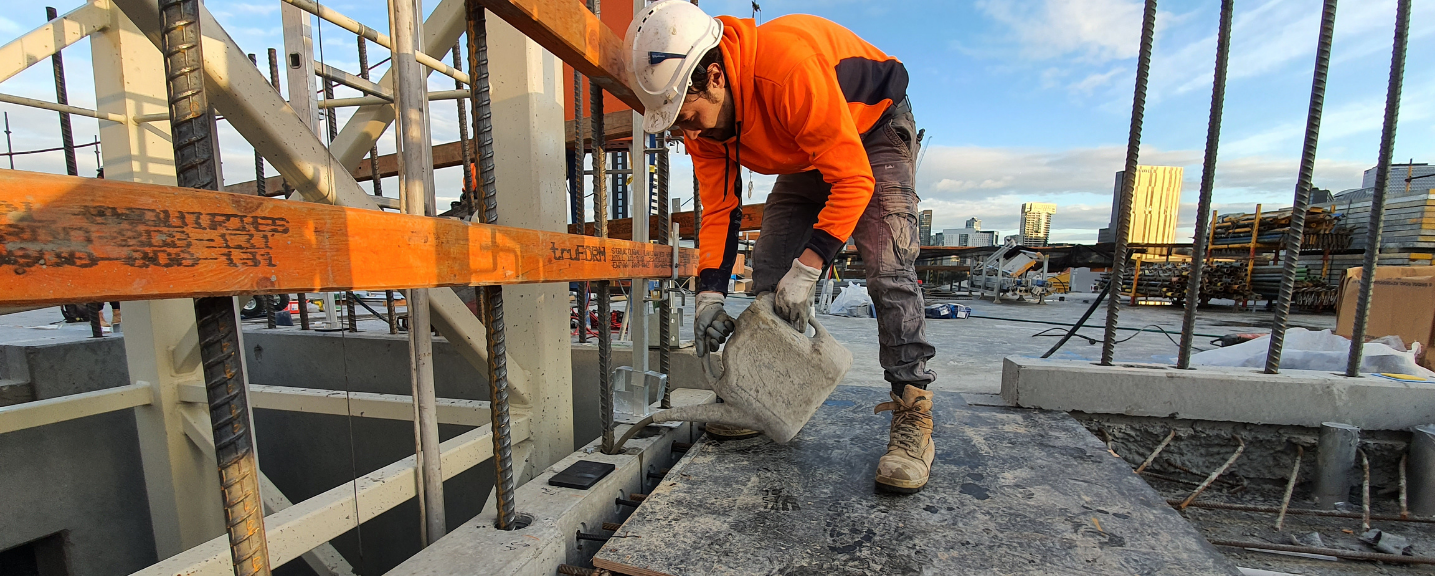
Concrete grouting is a useful application in the construction industry. Concrete grouting can be described as the process of infusing an amalgamation of cement, sand, water, or chemicals into cracks and gaps in concrete.
There are various types of grout, some of which are given below:
- Cementitious Grout: It is most prevalently used grout, which has ease of application but requires sealing to prevent staining and water absorption.
- Sanded and Unsanded Grout: Sanded grout contains sand particles, which makes it suitable for wider gaps, and unsanded grout is smoother and is suitable for narrow joints.
- Polymer-Modified Grout: It has polymer additives to enhance flexibility and as well as water resistance.
- Epoxy Grout: It is a specialised form of grout that uses epoxy resins instead of cement for increased durability.
In the realm of building construction, the process of grouting entails the injection of pumpable materials into a structure to modify its physical characteristics. It is one of the effective ways through which groundwater can be controlled during construction of buildings. There are two types of grouting – regular grouting and structural grouting.
Structural grouting can be described as a construction technique that entails filling gaps and creating connections between structural components. While grouting refers simply to the process of filling gaps or voids in construction structures with a cementitious material, structural grouting specifically entails applying a high-potency grout to strengthen or repair load-bearing components of a structure, like columns or beams. Structural grouting requires a grout of exceptional strength and less shrinkage to withstand immense stress and weight.
For applying grouting, a grouting specialist is preferred while for applying epoxy, the services of an epoxy specialist is preferred. A grouting specialist typically works with traditional cement-based grout for filling gaps between tiles in construction work.
What About Epoxy ?
Now let us come to epoxy. It is a thermosetting polymer that is being applied to generate coatings, adhesives, and other materials with strength, durability and chemical resistance. Simply put epoxy is a synthetic resin-based material known for its high strength, chemical resistance, and durability. Its two primary components are epoxy resin and hardener.
- Epoxy resin is the base material giving adhesion and structural integrity.
- Hardener is a curing agent that sparks the chemical reaction, which hardens the epoxy into a durable surface.
- In modern day real estate operations, epoxy has become a game-changer, combining durability, versatility, and aesthetic appeal.
- It is extensively being used across residential, commercial, and industrial properties.
- Epoxy has significant usage in industrial and commercial construction applications, which include flooring, countertops, waterproof coatings and structural applications. It is also being applied in grout formulations, which gives better performance than traditional cement-based grout.
The application of epoxy can contribute to the longevity of the property and also can reduce the property’s maintenance costs over a period of time.There are various uses of epoxy in real estate operations which we are briefly enumerating.
Epoxy Flooring
One of the major applications of epoxy in commercial spaces is flooring. Epoxy flooring gives showrooms, retail stores, and office spaces a glitzy look with ease of maintenance.
Epoxy flooring prevents the occurrence of stains, influence of chemicals, and abrasions thereby contributing to the appeal and longevity of traffic-intensive commercial spaces. Epoxy floors are being preferred in many factories and warehouses because of their effective resistance to heavy machinery, chemicals, and spills.
For Concrete Repair and Strengthening
Epoxy plays an important role in repairing and reinforcing concrete structures thereby restoring their structural integrity. Epoxy injection systems are being used to fill cracks in foundations, walls, and driveways, which prevent the structure from further deterioration. Epoxy is also used in commercial and residential buildings to strengthen connections in bridges, columns, and beams.
Epoxy Coatings
Epoxy coatings can benefit outdoor surfaces like patios, driveways, and pool decks by endowing them with enhanced durability and greater resistance to weather vagaries. Epoxy coatings could also be textured to develop better grip in wet conditions, they safeguard surfaces from sun damage and fading.
Epoxy coatings can also safeguard basements from the menace of water infiltration, which in turn lowers the risk of invasion of mold and foundation damage.
Property Renovations and Upgrades
Applications of epoxy in real estate are not only prevalent in new constructions but also for renovation projects, which in turn can give an impetus to the market value of the property concerned.
Epoxy flake flooring can improve visual appeal of commercial spaces and epoxy paint can lead to waterproof, easy-to-clean walls in busy spaces like commercial kitchens, hospitals, and laboratories.
Comparative Advantages
Many builders are often faced with the dilemma of choosing between grout and epoxy for which evaluation of comparative advantages of both are needed.
Epoxy doesn’t absorb moisture and has high resistance to cracking, thereby making it more suitable for industrial applications.
Grout necessitates sealing for better resistance against moisture and stains whereas epoxy hardens into a non-porous, highly durable surface which is resistant to chemicals and moisture.
Though durable, over time traditional grout is susceptible to cracking or degrading because of exposure to moisture and cleaning agents and if not properly sealed, it becomes vulnerable to staining and mold growth.
Grout is porous and tends to absorb water, thereby making it susceptible to staining and mildew growth whereas epoxy being non porous repeals moisture and stains, thereby making its application ideal for areas which are prone to be exposed to heavy moisture, such as bathroom, kitchen and commercial outlets.
Grout is easier to apply than epoxy where it is amalgamated with water and then applied as a grout float whereas epoxy is somewhat more difficult to apply due to its sticky characteristics. Epoxy requires more precise mixing and is also harder to remove from tile surfaces than grout, if not cleaned immediately.
Grout requires more maintenance in terms of sealing and periodic cleaning to prevent discolouration and damage whereas epoxy is easy to clean, and resists the emergence of stains and mold.
As per as their cost goes, grout is of course, more affordable option among the two but if you take into account the durability of the two into consideration then it is harder to state which of the options is more costly or affordable in the long-run. In short, we can say that though the initial cost of epoxy is more but it has less maintenance and tends to have more longevity.
The aesthetic appeal of grout also is more prone to fade over time whereas epoxy tends to maintain its colour and finish for years.
What to Choose?
For industrial projects and also for many commercial projects where durability and longevity are greater priorities than cost considerations, it is preferable to apply epoxy in construction work.
Moreover, in areas like commercial kitchens, laboratory, hospitals etc, where stain and mold resistance are not only essential but can be often critical, epoxy is a preferable option.
However, if one is working on a residential project with constant cost constraints and provided the area is not prone to be exposed much to moisture and stains, it is preferable to use grout. But in that case it is preferable to install tiles in dry areas with less exposure to moisture.
BSL’s Advantage
In Melbourne, if you are in the lookout for epoxy and grouting services in your building, then BSL Group can be a preferred option. BSL Group provides bespoke contracting work for grouting to builders, architects, and infrastructure companies and in residential projects in Melbourne.
They have three decades of experience, professional and customisable service, and a solution-based approach to deliver superior quality in all their projects, irrespective of their size.
When you work with BSL, they will assess the concerned site to identify issues and depending on your requirement and budget, they will advise you on effective epoxy or grouting solutions that work for the long-term. With a team of specialists and state-of-art machinery, BSL can help in the application of epoxy or grout in a structure and remove stains and fix discolouration to re-grout and repair existing structure.